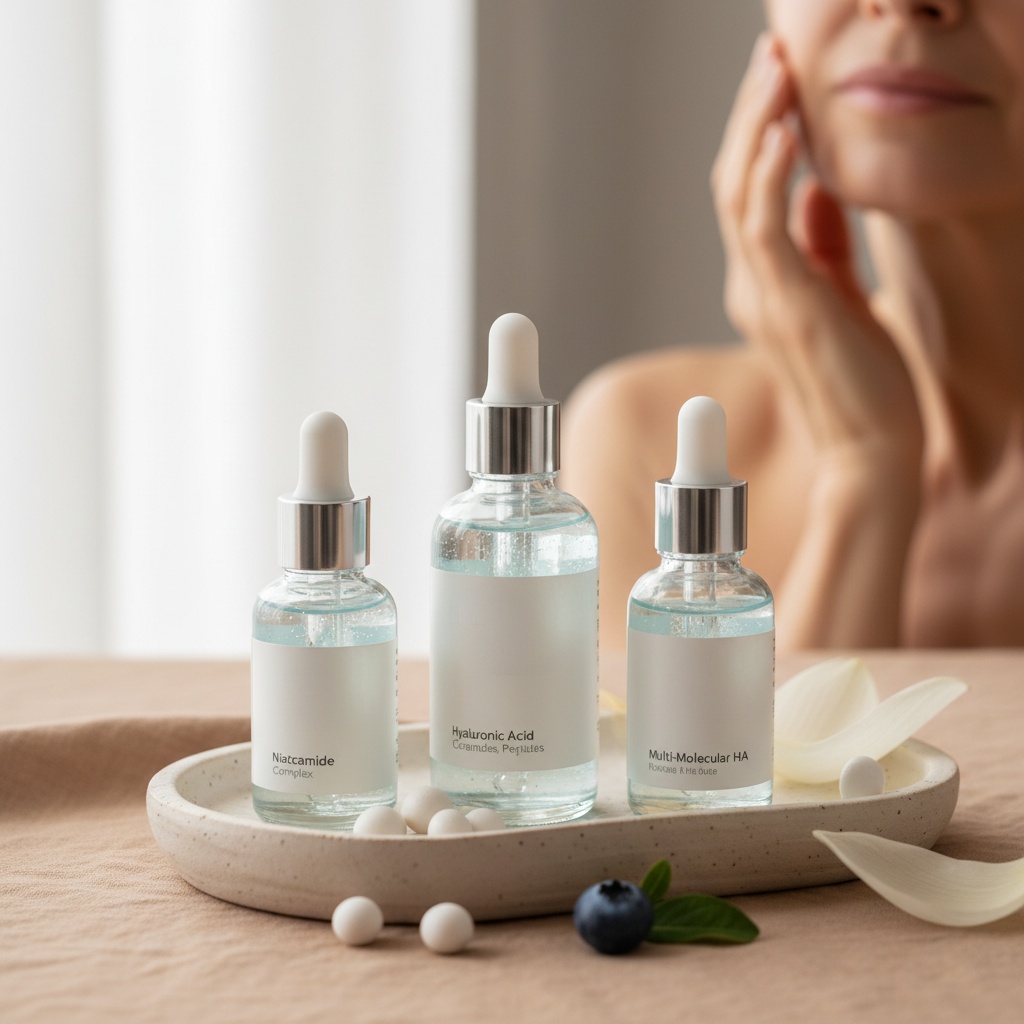
TL;DR: For plumping mature skin, the best hydrating serums with hyaluronic acid combine multi-molecular weight HA with synergistic ingredients like ceramides, peptides, and niacinamide to deeply hydrate, support the skin barrier, and visibly reduce the appearance of fine lines. Prioritize formulations that suit your skin type and integrate seamlessly into your existing routine for optimal, lasting results.
Introduction
As we navigate the ever-evolving landscape of skincare in 2026, one ingredient consistently stands out for its remarkable hydrating and plumping capabilities: hyaluronic acid (HA). For mature skin, which often experiences increased dryness, loss of elasticity, and visible fine lines, a high-quality HA serum isn’t just a luxury—it’s a fundamental step towards a more supple, resilient complexion. This article will guide you through selecting the best hydrating serums specifically formulated to address the unique needs of mature skin.
What Happens to Mature Skin and Why Does Hydration Matter So Much?
With age, our skin undergoes significant changes. Collagen and elastin production naturally decline, leading to a loss of firmness and the formation of wrinkles. Crucially, the skin’s natural ability to retain moisture also diminishes. Our body’s own hyaluronic acid stores deplete, and the skin barrier can become compromised, making it more susceptible to environmental damage and dehydration. This cycle exacerbates the appearance of fine lines, dullness, and a lack of bounce. Optimal hydration isn’t just about comfort; it’s about supporting the skin’s structural integrity, enhancing its natural repair processes, and restoring a youthful plumpness that mitigates the visual effects of aging.
The Role of Hyaluronic Acid (HA)
Hyaluronic acid is a powerful humectant, meaning it draws moisture from the environment and deeper layers of the skin to the surface. A single molecule can hold up to 1,000 times its weight in water, effectively hydrating and plumping the skin from within. For mature skin, HA acts like a sponge, re-saturating dehydrated cells, smoothing out the appearance of fine lines, and improving elasticity. Modern HA serums often feature various molecular weights: larger molecules sit on the surface to create a protective, hydrating film, while smaller, fragmented molecules can penetrate deeper for more profound hydration and long-term benefits.
Beyond HA: Other Hydration Heroes
While hyaluronic acid is a star, the most effective serums for mature skin often include a symphony of other actives that support hydration, barrier function, and anti-aging:
- Niacinamide (Vitamin B3): This versatile ingredient strengthens the skin barrier, reduces inflammation, minimizes pore appearance, and improves overall skin tone and texture. It’s excellent for sensitive and mature skin.
- Ceramides: Essential lipids that make up a significant portion of the skin barrier, ceramides help to lock in moisture and protect against environmental aggressors. They are crucial for repairing and maintaining a healthy barrier.
- Peptides: Short chains of amino acids that act as building blocks for proteins like collagen and elastin. Different peptides can signal the skin to produce more collagen, improve firmness, and reduce the appearance of wrinkles.
- Glycerin: Another potent humectant that works synergistically with HA to draw and retain moisture, leaving skin soft and supple.
- Vitamin C: A powerful antioxidant that brightens skin, reduces hyperpigmentation, and stimulates collagen production, contributing to a firmer, more radiant complexion.
- Retinol/Retinal: While primarily known for cell turnover and collagen stimulation, these vitamin A derivatives can indirectly improve hydration by strengthening the skin barrier over time. When used alongside HA, they can mitigate potential dryness.
How Do I Choose the Best Hyaluronic Acid Serum for Plumping Mature Skin?
Selecting the right HA serum involves more than just looking for “hyaluronic acid” on the label. Consideration of formulation, supporting ingredients, and skin type are paramount for achieving optimal results.
Concentration and Molecular Weight
Look for serums that specify a multi-molecular weight HA complex. This ensures hydration at different depths of the skin. While a higher concentration (e.g., 2%) might sound better, excessive HA on its own can sometimes draw moisture from the skin in very dry environments if not properly sealed with a moisturizer. A balanced formulation with 0.5% to 2% HA, combined with other humectants, is often ideal.
Supporting Ingredients
As discussed, synergistic ingredients are key. Serums featuring ceramides, niacinamide, peptides, or antioxidants will provide a more comprehensive benefit for mature skin than HA alone. These additional actives help to repair the skin barrier, stimulate collagen, and protect against free radical damage, enhancing the plumping and anti-aging effects.
Formulation for Different Skin Types
- Dry/Very Dry Skin: Seek out richer formulations with higher concentrations of ceramides, glycerin, and occlusive ingredients to prevent moisture loss. Layering with a heavier moisturizer is essential.
- Oily/Combination Skin: Opt for lightweight, non-comedogenic gel or water-based textures that won’t feel heavy or clog pores. These skin types still need hydration, especially if using actives like salicylic acid or retinol.
- Sensitive Skin: Choose fragrance-free, dye-free formulas with soothing ingredients like niacinamide or panthenol. Always patch test new products.
Drugstore vs. Prestige: What’s the Real Difference?
In 2026, the gap between drugstore and prestige skincare continues to narrow, especially for active ingredients like hyaluronic acid. Many drugstore brands now offer sophisticated formulations with multi-molecular HA and beneficial supporting ingredients. The primary differences often lie in:
- Ingredient Source/Purity: While both can be effective, some prestige brands may claim higher purity or sustainably sourced ingredients, though this doesn’t always translate to superior efficacy.
- Concentration & Delivery Systems: Prestige products might incorporate patented delivery systems or slightly higher concentrations of specific, advanced peptides.
- Sensory Experience: Packaging, texture, and scent (if present) often contribute to the “luxury feel” of prestige products.
Ultimately, an effective serum from a reputable drugstore brand can be just as beneficial as a high-end option. Focus on the ingredient list and formulation over price tag.
SkincareNA’s Top Picks: Hydrating Serums for Mature Skin
Here are some examples of well-formulated hyaluronic acid serums designed to plump and revitalize mature skin, considering various needs and preferences. Remember, individual results may vary, and patch testing is always recommended.
| Product Name (Example) | Key Hydrating Actives | Additional Benefits for Mature Skin | Best For |
|---|---|---|---|
| GlowLabs Hydro-Plump Serum | Multi-molecular HA, Glycerin | Niacinamide (barrier support, brightening), Panthenol (soothing), Peptide Complex (firming) | All skin types, especially those seeking comprehensive anti-aging benefits and barrier repair. |
| DermAesthetic HA Barrier Repair | Low & High Molecular Weight HA | Ceramides (NP, AP, EOP), Cholesterol, Fatty Acids (intensive barrier restoration), Squalane (emollient) | Dry, compromised, or sensitive mature skin in need of significant barrier repair and deep hydration. |
| PureBloom Youthful Dew Serum | Triple HA Complex, Tremella Mushroom Extract | Vitamin C (THD Ascorbate for brightening and collagen), Ferulic Acid (antioxidant boost), Botanical Extracts | Mature skin concerned with dullness, uneven tone, and seeking antioxidant protection alongside plumping. |
| EverYouth Advanced HA Filler | Cross-linked HA, Acetyl Hexapeptide-8 | Argireline-like peptide for expression lines, Amino Acids (skin conditioning) | Mature skin with visible fine lines and wrinkles, seeking an immediate smoothing and plumping effect. |
Maximizing Your Serum’s Efficacy: Application Tips for 2026
Even the best serum won’t perform optimally without proper application. Here’s how to get the most out of your hyaluronic acid serum for mature skin:
- Apply to Damp Skin: Hyaluronic acid works by drawing moisture. Applying it to slightly damp skin (e.g., after cleansing or misting with a toner) provides a reservoir of water for the HA to pull from, preventing it from potentially drawing moisture from deeper skin layers.
- Layer Correctly: Serums typically go on after cleansing and toning, but before heavier moisturizers or oils. Apply thinnest to thickest consistency. Your HA serum should be one of the first leave-on products.
- Seal with a Moisturizer: This is crucial. A good moisturizer acts as an occlusive layer, trapping the hydration delivered by the HA serum and preventing it from evaporating, especially in dry climates.
- Consistency is Key: Incorporate your HA serum into both your morning and evening routines for continuous hydration and visible plumping effects over time.
- Consider Environmental Humidity: In extremely dry environments, an HA serum alone might not be sufficient. Ensure you’re using a robust moisturizer on top and consider a humidifier in your living space.
- Don’t Forget SPF: While not directly related to HA application, daily use of a broad-spectrum mineral SPF (at least SPF 30) is the single most important anti-aging step. It protects the integrity of your skin barrier and prevents further collagen breakdown, allowing your hydrating serums to work more effectively.
What Are Common Misconceptions About Hyaluronic Acid?
Despite its popularity, HA still faces some misunderstandings. One common myth is that all HA is the same; however, as discussed, molecular weight significantly impacts its function. Another misconception is that HA serums can replace moisturizers entirely. While incredibly hydrating, HA is a humectant and needs an occlusive layer (your moisturizer) to seal in the moisture it attracts. Without it, especially in low humidity, the HA could potentially draw moisture out of your skin and into the air. Finally, some believe that higher concentrations are always better. For HA, this isn’t necessarily true; a well-formulated serum with a moderate concentration and supporting ingredients often outperforms a very high concentration of HA used in isolation, providing balanced hydration without stickiness or potential dryness.
Frequently Asked Questions
Is a higher HA concentration always better?
Not necessarily. While a 1-2% HA concentration is effective, excessively high concentrations (e.g., 5% or more) can sometimes feel sticky or, in very dry climates, potentially draw moisture from your skin if not properly sealed with a good moisturizer. A balanced formulation with multi-molecular weights and supporting ingredients is often more beneficial than a single high concentration.
Can I use a HA serum with retinol or Vitamin C?
Absolutely! Hyaluronic acid is incredibly versatile and pairs well with most other active ingredients, including retinol and vitamin C. In fact, using an HA serum can help buffer the potential dryness or irritation sometimes associated with potent actives like retinoids (e.g., retinol or retinal), making your routine more comfortable and effective.
How long does it take to see results from a hydrating serum?
You can often feel an immediate improvement in skin hydration and softness after the first application. Visible plumping and a reduction in the appearance of fine lines may become noticeable within a few days to a couple of weeks of consistent use, as your skin barrier improves and moisture levels stabilize.
What’s the difference between HA serum and a moisturizer?
A hyaluronic acid serum is primarily a humectant, designed to attract and hold water in the skin. A moisturizer, on the other hand, typically contains a blend of humectants, emollients (to soften and smooth), and occlusives (to create a barrier and prevent water loss). Think of the serum as the “water magnet” and the moisturizer as the “seal” that locks that water in.
Are there any HA serums FDA-approved?
Hyaluronic acid itself is generally recognized as safe (GRAS) for cosmetic use. However, the FDA primarily approves drugs for specific medical claims (e.g., treating acne, protecting from sun). While some HA-based injectables (like dermal fillers) are FDA-approved as medical devices, topical HA serums are categorized as cosmetics. Their claims for hydration and plumping are based on cosmetic efficacy, not FDA drug approval.
Conclusion
For mature skin, a well-chosen hyaluronic acid serum is an indispensable tool for achieving a visibly plumper, more hydrated, and resilient complexion. By understanding the nuances of HA, recognizing the power of synergistic ingredients, and applying your serum correctly, you can effectively combat the signs of aging and restore a youthful glow. Embrace the science-backed benefits of HA and make informed choices to nourish your skin from within, ensuring it looks and feels its best in 2026 and beyond.