Choosing the right anti-aging routine in your 50s and beyond means prioritizing skin barrier health, incorporating FDA-approved actives like retinoids and antioxidants, and maintaining consistent protection against environmental damage. Focus on hydration, gentle exfoliation, and personalized solutions to address your unique skin concerns, rather than chasing every new trend.
Introduction
As we navigate our 50s and the decades that follow, our skin undergoes significant transformations. What worked in our 30s or 40s may no longer be effective, and new concerns like increased dryness, loss of elasticity, and deeper lines emerge. This guide from SkincareNA is designed to help you cut through the noise and build an evidence-informed, effective anti-aging routine tailored for mature skin in 2026.
Why Does My Skin Change So Much After 50?
Understanding the physiological shifts in your skin is the first step to addressing them effectively. After 50, several key changes accelerate:
- Collagen and Elastin Depletion: Production significantly slows, leading to decreased firmness, elasticity, and the formation of deeper wrinkles and sagging.
- Slower Cell Turnover: Skin cells take longer to renew, resulting in a duller complexion, rougher texture, and slower healing.
- Reduced Sebum Production: Oil glands become less active, causing increased dryness, flakiness, and a compromised skin barrier.
- Hormonal Shifts: Menopause, in particular, dramatically impacts skin health, contributing to thinning, dryness, and sensitivity.
- Accumulated Sun Damage: Years of UV exposure manifest as hyperpigmentation (age spots), uneven tone, and a breakdown of the skin’s structural integrity.
These changes collectively make the skin more fragile, prone to irritation, and less resilient. Therefore, your routine needs to focus on replenishment, protection, and gentle stimulation.
Which Anti-Aging Actives Actually Deliver Results for Mature Skin?
Not all ingredients are created equal. For mature skin, a strategic selection of well-researched actives is paramount. Here are the power players:
Retinoids (Retinol, Retinaldehyde, Tretinoin)
Retinoids are the gold standard in anti-aging, stimulating collagen production, accelerating cell turnover, and improving skin texture, tone, and fine lines. For mature skin, starting with a lower concentration of retinol or retinaldehyde (retinal) and gradually increasing is key to minimize irritation. Retinal is a 2026 trend, praised for being a more potent precursor to retinoic acid than retinol, often delivering faster results with less irritation for some.
Vitamin C (L-Ascorbic Acid)
A powerful antioxidant, Vitamin C brightens the skin, fades hyperpigmentation, and protects against free radical damage from UV radiation and pollution. It also plays a crucial role in collagen synthesis. Look for formulations with L-ascorbic acid, ideally between 10-20%, in opaque, air-tight packaging to maintain stability.
Peptides
These short chains of amino acids act as messengers, signaling your skin to produce more collagen, elastin, or other beneficial proteins. Different peptides target different concerns, such as copper peptides for wound healing and collagen synthesis, or signal peptides for firmness. They are excellent for supporting skin structure without irritation.
Hyaluronic Acid (HA)
While not strictly an “anti-aging” active in the collagen-stimulating sense, HA is crucial for mature skin. It’s a humectant that draws moisture into the skin, plumping it up and reducing the appearance of fine lines caused by dehydration. Look for products with multiple molecular weights of HA for multi-level hydration.
Niacinamide (Vitamin B3)
This versatile ingredient improves skin barrier function, reduces redness and inflammation, minimizes pore appearance, and offers some antioxidant benefits. It’s well-tolerated by most skin types, including sensitive mature skin, and works synergistically with other actives.
AHAs (Alpha Hydroxy Acids)
Glycolic acid and lactic acid are common AHAs that gently exfoliate the skin’s surface, improving texture, tone, and radiance. For mature skin, lactic acid is often preferred due to its larger molecular size and hydrating properties, making it less irritating than glycolic acid. Use sparingly, 1-3 times a week, to avoid over-exfoliation and protect the delicate skin barrier.
Mineral SPF (Zinc Oxide, Titanium Dioxide)
The single most important anti-aging step. Mineral sunscreens sit on top of the skin, physically blocking UV rays. For mature skin, mineral formulas are often preferred for their gentleness and broad-spectrum protection. Consistent daily use of SPF 30+ is non-negotiable, and 2026 research continues to emphasize the importance of reapplication every two hours when exposed to direct sun, and even on cloudy days.
How Do I Build a Daily Skincare Routine for My 50s and Beyond?
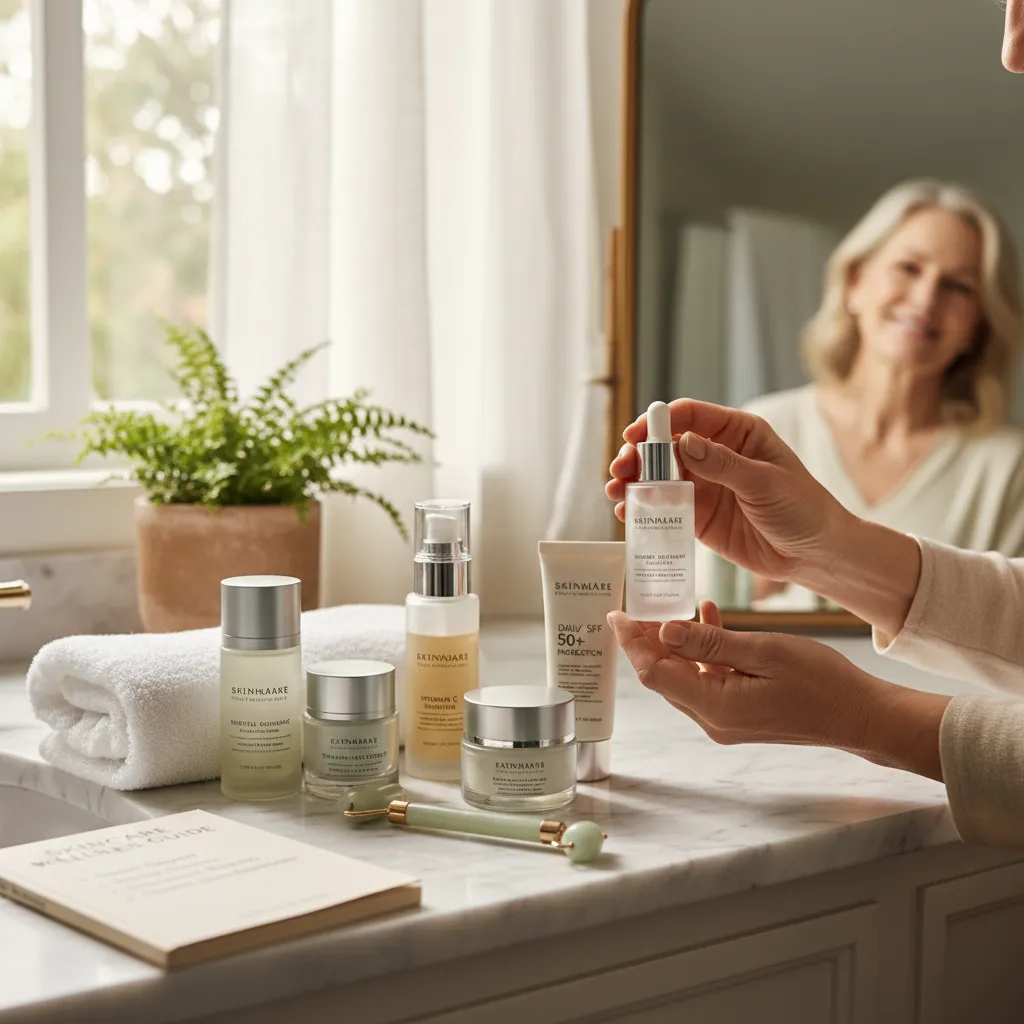
A consistent, balanced routine is more effective than sporadic use of many products. Here’s a foundational structure:
Morning Routine
- Gentle Cleanser: Choose a hydrating, non-foaming cleanser to remove overnight buildup without stripping natural oils.
- Antioxidant Serum: Apply a Vitamin C serum to protect against environmental damage and brighten the complexion.
- Hydrating Serum (Optional): If your skin is particularly dry, layer a hyaluronic acid serum.
- Eye Cream: Gently pat an eye cream formulated for mature skin around the delicate eye area.
- Moisturizer: Use a rich, emollient moisturizer to lock in hydration and support the skin barrier.
- Broad-Spectrum Mineral SPF 30+: This is non-negotiable. Apply generously as the final step.
Evening Routine
- Double Cleanse (Optional but Recommended): Start with an oil or balm cleanser to remove makeup and sunscreen, followed by your gentle cream cleanser.
- Treatment Serum (Retinoid or Peptide): Apply your retinoid product (retinol or retinal) or a peptide serum. Alternate nights if using strong actives or if your skin is sensitive.
- Hydrating Serum (Optional): Follow with hyaluronic acid or niacinamide serum if desired.
- Eye Cream: Reapply your eye cream.
- Moisturizer: Use a rich night cream, perhaps one containing ceramides or fatty acids to repair and replenish the skin barrier overnight.
Drugstore vs. Prestige: Where Should I Invest My Skincare Budget?
The beauty market offers options at every price point, and quality doesn’t always correlate directly with cost. Here’s how to approach your budget:
- Invest in Actives: For ingredients like retinoids, Vitamin C, and specific peptides, sometimes prestige brands offer more advanced delivery systems, stable formulations, or higher concentrations that can justify a higher price. However, many drugstore brands now offer excellent, effective formulations of these actives, often with dermatologist backing.
- Cleansers & Moisturizers: You can often find fantastic, hydrating, and gentle cleansers and moisturizers at the drugstore. Look for ingredients like ceramides, hyaluronic acid, glycerin, and colloidal oatmeal.
- Sunscreen: Both drugstore and prestige brands offer effective mineral sunscreens. Focus on finding one you enjoy wearing daily, as consistency is key.
The key is to read ingredient lists, understand active concentrations, and look for products that are fragrance-free and non-comedogenic, regardless of the brand’s price tier. Dermatologist-recommended drugstore brands often provide excellent value and efficacy.
What About At-Home Devices and Professional Treatments?
While a consistent topical routine forms the foundation, at-home devices and professional treatments can complement and enhance results for mature skin. However, they are not replacements for daily care.
At-Home Tools (2026 Trends)
- LED Light Therapy Masks: Red light LED therapy can stimulate collagen production, reduce inflammation, and improve skin tone. Consistency is crucial for results.
- Microcurrent Devices: These devices deliver low-level electrical currents to “train” facial muscles, potentially improving facial contour and firmness over time.
- Dermal-Grade At-Home Tools: The market is seeing an increase in more sophisticated, “dermal-grade” versions of popular at-home tools, offering higher efficacy when used correctly. Always follow instructions carefully.
Professional Treatments
Consulting a dermatologist is highly recommended for personalized advice and professional treatments that can significantly address mature skin concerns:
- Chemical Peels: Can improve texture, tone, and reduce hyperpigmentation.
- Laser Therapies: Address sun damage, wrinkles, and stimulate collagen.
- Microneedling: Induces collagen production for improved texture and firmness.
- Injectables (Botox, Fillers): Offer immediate results for lines and volume loss, but should be considered carefully with a qualified professional.
How Can I Protect My Skin Barrier and Prevent Sensitivity?
A healthy skin barrier is crucial for mature skin, which is naturally more prone to dryness and sensitivity. The focus on skin barrier health is a significant trend in 2026 skincare.
- Gentle Cleansing: Avoid harsh cleansers that strip the skin.
- Moisturize Regularly: Use moisturizers rich in ceramides, fatty acids, and cholesterol to replenish the barrier.
- Introduce Actives Slowly: Especially retinoids and AHAs. Start with lower concentrations and use them every other night or a few times a week, gradually increasing frequency as your skin tolerates.
- Avoid Over-Exfoliation: Too much exfoliation, whether physical or chemical, can damage the barrier. Listen to your skin.
- Hydrate from Within: Drink plenty of water and consider a diet rich in omega fatty acids.
Comparing Key Anti-Aging Ingredients for Mature Skin
Here’s a quick comparison of some of the most impactful ingredients:
| Ingredient | Primary Benefit for Mature Skin | How it Works | Best For |
|---|---|---|---|
| Retinaldehyde (Retinal) | Reduces wrinkles, improves firmness, evens tone | Converts to retinoic acid in one step, stimulating cell turnover and collagen production. | Fine lines, wrinkles, uneven texture, loss of firmness. |
| L-Ascorbic Acid (Vitamin C) | Brightens, protects from free radicals, fades spots | Potent antioxidant, inhibits melanin production, supports collagen synthesis. | Dullness, hyperpigmentation, environmental protection. |
| Peptides | Improves firmness and elasticity, reduces lines | Signal skin to produce more collagen, elastin, and other vital proteins. | Loss of firmness, fine lines, general skin support. |
| Niacinamide | Strengthens barrier, reduces redness, minimizes pores | Boosts ceramide production, anti-inflammatory, antioxidant. | Sensitive skin, redness, uneven tone, compromised barrier. |
| Hyaluronic Acid | Intense hydration, plumps skin, reduces dehydration lines | Attracts and holds up to 1000 times its weight in water. | Dryness, dehydration lines, overall plumping. |
Frequently Asked Questions
Is it ever too late to start an anti-aging routine?
No, it’s never too late! While prevention is ideal, consistent use of effective ingredients can still significantly improve skin texture, tone, and the appearance of wrinkles at any age. Starting now can prevent further damage and enhance your skin’s health.
My skin is very sensitive. Can I still use retinoids?
Yes, but with caution. Start with a very gentle retinoid like a bakuchiol product, or a low concentration (e.g., 0.025% retinal or 0.25% retinol) once or twice a week. Apply it after your moisturizer (the “sandwich method”) to buffer its effects. Gradually increase frequency as tolerated. Prioritize skin barrier health with ceramides and soothing ingredients.
Do I really need a separate eye cream?
The skin around the eyes is thinner and more delicate, making it prone to specific concerns like fine lines, puffiness, and dark circles. While some facial moisturizers can be used around the eyes, dedicated eye creams often contain targeted ingredients and lighter textures formulated specifically for this sensitive area. If you have specific eye concerns, an eye cream is a worthwhile addition.
How long does it take to see results from an anti-aging routine?
Patience is key. You might notice initial improvements in hydration and radiance within a few weeks. However, significant changes in fine lines, wrinkles, and hyperpigmentation typically take 3-6 months of consistent use, especially with retinoids. Stick with your routine for at least this long before evaluating its effectiveness.
What’s the biggest mistake women over 50 make with their skincare?
One of the biggest mistakes is over-exfoliating or using too many harsh actives, which can compromise the already delicate skin barrier, leading to increased dryness, redness, and sensitivity. Another common error is neglecting daily sunscreen, which is the most potent anti-aging step.
Conclusion
Navigating anti-aging skincare in your 50s and beyond is about understanding your skin’s evolving needs and adopting a routine that is both effective and gentle. By focusing on a few key, evidence-based actives, prioritizing skin barrier health, and consistently protecting your skin from the sun, you can achieve a radiant, healthy complexion that reflects your inner vitality. Remember, consistency and personalization are your most powerful tools.