TL;DR: Both CeraVe and La Roche-Posay offer excellent cleansers for acne-prone skin, each with distinct strengths. CeraVe often excels in gentle, barrier-supporting formulations ideal for sensitive or compromised skin, while La Roche-Posay provides more targeted, potent options for persistent or oilier acne, often incorporating unique ingredients for enhanced efficacy. The “best” choice hinges on your specific skin type, acne severity, and sensitivity.
Introduction
Navigating the vast world of skincare can feel like a full-time job, especially when you’re battling acne. For many women in the US, the quest for clear, healthy skin often leads to two powerhouse drugstore brands: CeraVe and La Roche-Posay. Both are consistently recommended by dermatologists and lauded for their science-backed formulations. But when it comes to cleansers for acne-prone skin, which one truly stands out in 2026? This comprehensive guide will break down their philosophies, key products, and ingredient approaches to help you make an informed decision.
What Makes a Cleanser “Good” for Acne-Prone Skin in 2026?
The landscape of acne care has evolved significantly, moving beyond harsh, stripping formulas to a more holistic approach that prioritizes skin barrier health alongside effective blemish control. In 2026, a top-tier cleanser for acne-prone skin must strike a delicate balance.
Gentle Yet Effective Cleansing
The days of squeaky-clean skin being the goal are long gone. Over-stripping the skin can paradoxically trigger more oil production and exacerbate breakouts. Modern cleansers for acne should effectively remove makeup, dirt, and excess oil without compromising the skin’s natural moisture barrier.
Prioritizing Skin Barrier Integrity
A healthy skin barrier is your first line of defense against environmental aggressors and a crucial component in managing acne. Many acne treatments, from topical retinoids to prescription medications, can weaken this barrier. Cleansers that support barrier function with ingredients like ceramides and hyaluronic acid are highly valued.
Non-Comedogenic and pH-Balanced
This remains non-negotiable. “Non-comedogenic” means the product won’t clog pores, which is vital for acne prevention. A pH-balanced formula (typically between 5.0 and 6.0) helps maintain the skin’s natural acidic mantle, which is essential for its protective functions.
Targeted Actives (FDA-Approved)
While cleansers aren’t on the skin long, they can deliver beneficial actives. The most common and FDA-approved over-the-counter actives for acne include:
- Salicylic Acid (BHA): This oil-soluble beta-hydroxy acid penetrates deep into pores to dissolve sebum and dead skin cells, making it excellent for blackheads and whiteheads.
- Benzoyl Peroxide: A powerful ingredient that kills acne-causing bacteria and helps shed dead skin cells. While highly effective, it can be more irritating and is less commonly found in daily, gentle cleansers compared to leave-on treatments.
- Alpha Hydroxy Acids (AHAs) like Glycolic or Lactic Acid: Water-soluble exfoliants that work on the skin’s surface to improve texture and brighten. Less direct for pore clogging than BHAs, but can help with post-inflammatory hyperpigmentation.
CeraVe: The Dermatologist-Loved Barrier Builder
CeraVe has cemented its reputation as a dermatologist favorite, known for its accessible, no-frills, and highly effective formulations. The brand’s core philosophy centers on restoring and maintaining the skin’s natural barrier.
CeraVe’s Approach to Acne Cleansing
At the heart of CeraVe’s efficacy are three essential ceramides, hyaluronic acid for hydration, and often niacinamide (Vitamin B3) for its anti-inflammatory and barrier-supporting properties. These ingredients work synergistically to cleanse gently while fortifying the skin.
Key CeraVe Cleansers for Acne-Prone Skin
- CeraVe Renewing SA Cleanser: This is CeraVe’s flagship acne cleanser. It contains salicylic acid to exfoliate and penetrate pores, along with ceramides, hyaluronic acid, and niacinamide to maintain the skin barrier. It’s a gel-to-foam texture, suitable for normal to oily skin types prone to mild to moderate acne, blackheads, and textural irregularities.
- CeraVe Foaming Facial Cleanser: While not specifically an “acne” cleanser with actives, its gentle, non-stripping foam effectively removes excess oil, dirt, and makeup. It’s an excellent choice for oily or combination skin that needs a thorough cleanse without irritation, especially if you’re using other targeted acne treatments. It contains ceramides and niacinamide.
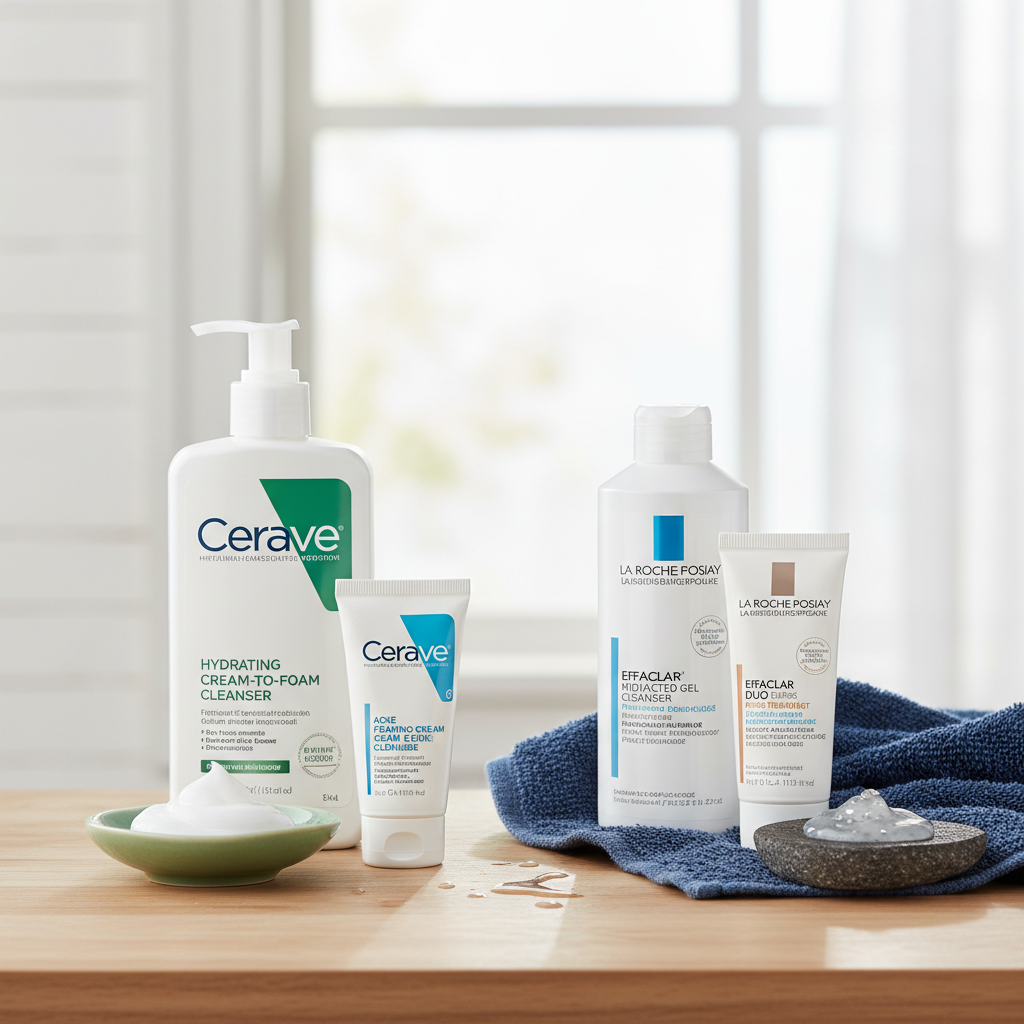
- CeraVe Hydrating Cream-to-Foam Cleanser: Ideal for those with acne-prone but drier or more sensitive skin, or those whose skin barrier is compromised from other treatments. It starts as a cream to hydrate and then foams to gently cleanse, removing impurities without stripping. It doesn’t contain salicylic acid but offers a very gentle cleansing base.
Pros of CeraVe Cleansers for Acne
CeraVe excels in offering gentle, yet effective, cleansing solutions. Their products are widely available at drugstores across the US, making them highly accessible and affordable. The consistent inclusion of ceramides, hyaluronic acid, and niacinamide means that even their active-containing cleansers are formulated with skin barrier health in mind, reducing the likelihood of irritation or dryness often associated with acne treatments. This makes them particularly suitable for individuals with sensitive skin or those undergoing potent prescription acne therapies.
Cons of CeraVe Cleansers for Acne
While excellent for mild to moderate acne and barrier support, CeraVe’s formulations might be perceived as less potent for individuals with more severe or stubborn acne. The concentration of actives like salicylic acid, while effective, is often balanced for gentleness, which might not be enough for some skin types that require a stronger approach. The range of targeted actives beyond salicylic acid is also somewhat limited in their cleanser offerings.
La Roche-Posay: Targeted Solutions for Resilient Skin
La Roche-Posay, another French pharmacy staple, brings a slightly different philosophy to the table. While also focusing on efficacy and tolerability, their products often feature a higher concentration of specific actives and are geared towards more targeted skin concerns, frequently leveraging their proprietary thermal spring water for its soothing and antioxidant properties.
La Roche-Posay’s Approach to Acne Cleansing
La Roche-Posay’s acne line, Effaclar, is specifically designed to address oily and acne-prone skin. They often incorporate ingredients like salicylic acid, LHA (Lipo-Hydroxy Acid), and zinc pidolate to purify pores, reduce oil, and calm inflammation. Their formulations are rigorously tested for efficacy and tolerability, even on sensitive skin.
Key La Roche-Posay Cleansers for Acne-Prone Skin
- La Roche-Posay Effaclar Medicated Gel Cleanser: This is a powerful choice for moderate to severe acne. It features 2% salicylic acid and LHA, a micro-exfoliant that provides precise, cell-by-cell exfoliation. It’s designed to target excess oil, blackheads, and whiteheads, leaving skin feeling thoroughly clean. This cleanser is often recommended for those who need a more intensive approach.
- La Roche-Posay Effaclar Purifying Foaming Gel Cleanser: A gentler option within the Effaclar range, this cleanser is formulated for oily and sensitive skin. It effectively removes impurities and excess sebum without drying, thanks to its pH-balanced formula and soothing thermal spring water. It does not contain salicylic acid, making it a good daily option if you use other active treatments or have very sensitive skin.
- La Roche-Posay Toleriane Purifying Foaming Cleanser: While not part of the Effaclar line, this cleanser is excellent for normal to oily and sensitive skin, including acne-prone types looking for extreme gentleness. It contains ceramides and niacinamide, much like CeraVe, focusing on maintaining the skin barrier while effectively cleansing. It’s a fantastic alternative if the Effaclar Medicated Gel is too strong.
Pros of La Roche-Posay Cleansers for Acne
La Roche-Posay’s cleansers, particularly within the Effaclar line, are often praised for their targeted efficacy in managing oiliness and more stubborn forms of acne. The inclusion of LHA in some formulas provides a unique, gentle yet effective exfoliation. The brand’s commitment to clinical testing and its use of thermal spring water contribute to formulations that are often well-tolerated even by sensitive skin, despite their potency. They offer solutions that feel more “dermal-grade” for at-home use, appealing to those seeking stronger results from a drugstore brand.
Cons of La Roche-Posay Cleansers for Acne
While still considered drugstore-accessible, La Roche-Posay products typically come with a slightly higher price tag than CeraVe. Their more potent formulations, especially the Effaclar Medicated Gel Cleanser, might be too drying or irritating for individuals with very dry or highly sensitive acne-prone skin, particularly if they are new to actives or using other strong treatments. Careful selection based on individual skin resilience is necessary.
How Do Their Key Acne-Fighting Ingredients Compare?
Both brands utilize effective ingredients, but their emphasis and complementary components differ.
Salicylic Acid (BHA)
Both CeraVe and La Roche-Posay use salicylic acid. It’s an oil-soluble exfoliant that penetrates deep into pores to dissolve sebum and dead skin cells, effectively treating and preventing breakouts, especially blackheads and whiteheads. La Roche-Posay’s Effaclar Medicated Gel Cleanser often features a 2% concentration, coupled with LHA, for a potent combination. CeraVe’s Renewing SA Cleanser also contains salicylic acid, but its formula typically prioritizes barrier support alongside exfoliation.
LHA (Lipo-Hydroxy Acid)
Unique to La Roche-Posay, LHA is a derivative of salicylic acid. It’s known for its precise, cell-by-cell exfoliating action, making it incredibly effective yet very gentle. LHA has a larger molecular size and a slower penetration rate than traditional salicylic acid, which means it exfoliates the skin’s surface without causing irritation, making it excellent for sensitive skin that still needs exfoliation.
Niacinamide (Vitamin B3)
Both brands incorporate niacinamide, though CeraVe often highlights it more prominently in its core formulations. Niacinamide is a powerhouse ingredient that helps reduce inflammation, calm redness, minimize the appearance of pores, and strengthen the skin barrier by supporting ceramide production. It’s a fantastic all-rounder for acne-prone skin.
Ceramides
CeraVe’s signature ingredient, ceramides, are lipids naturally found in the skin barrier. They act like the “mortar” between skin cells, helping to hold the barrier intact, prevent moisture loss, and protect against irritants. Their inclusion in cleansers ensures that even while cleansing, the skin’s protective layer is being supported, which is crucial for acne-prone skin often undergoing drying treatments. La Roche-Posay also features ceramides in some of its Toleriane line, focusing on barrier repair for sensitive skin.
Which Cleanser is Right for Your Acne-Prone Skin? A SkincareNA Guide
Choosing between these two excellent brands ultimately comes down to your specific skin needs and concerns. Here’s a comparative table to guide your decision:
| Cleanser Name | Key Actives | Best For (Skin Type/Acne Type) | Texture | SkincareNA Insight |
|---|---|---|---|---|
| CeraVe Renewing SA Cleanser | Salicylic Acid, Ceramides, Niacinamide, Hyaluronic Acid | Normal to Oily, Mild to Moderate Acne, Blackheads, Uneven Texture, Sensitive Skin | Gel-to-foam | A balanced choice for daily exfoliation and barrier support. Excellent for reducing congestion without harshness. |
| CeraVe Foaming Facial Cleanser | Ceramides, Niacinamide, Hyaluronic Acid | Normal to Oily, Combination, Sensitive Skin (if using other actives) | Foaming gel | A superb foundational cleanser to remove excess oil and makeup without stripping, especially when pairing with potent leave-on treatments. |
| La Roche-Posay Effaclar Medicated Gel Cleanser | 2% Salicylic Acid, LHA | Oily, Moderate to Persistent Acne, Blackheads, Whiteheads, Resilient Skin | Gel | A more intensive option for stubborn breakouts and significant oiliness. Offers powerful exfoliation. |
| La Roche-Posay Effaclar Purifying Foaming Gel Cleanser | Zinc Pidolate, Thermal Spring Water | Oily, Sensitive, Combination Skin (mild acne, or as a gentle alternative) | Foaming gel | A gentle yet effective daily cleanser for oily skin that needs purification without dryness. Great for maintaining balance. |
Beyond the Cleanser: Optimizing Your Routine for Clear Skin in 2026
A cleanser is just one piece of the puzzle. For truly clear and healthy skin, especially when dealing with acne, a holistic routine is paramount.
- Don’t Over-Cleanse: Washing your face twice a day is usually sufficient. Over-washing can irritate the skin and disrupt the barrier, leading to more breakouts.
- Follow with Appropriate Treatments: After cleansing, apply targeted treatments. This could be a retinoid (like retinal for faster results, or retinol), benzoyl peroxide spot treatments, or serums with niacinamide or vitamin C to address post-inflammatory hyperpigmentation.
- Moisturize Religiously: Even oily and acne-prone skin needs hydration. A lightweight, non-comedogenic moisturizer helps maintain skin barrier health, preventing dryness and irritation, especially when using active treatments. Look for formulas with hyaluronic acid or ceramides.
- Never Skip Sunscreen: Sun exposure can worsen post-acne marks and increase inflammation. Use a broad-spectrum mineral SPF 30+ daily, and remember the importance of reapplication every two hours, especially if active outdoors, a crucial aspect of 2026 sun protection science.
- Patch Test New Products: Always apply a new product to a small, inconspicuous area of your skin for a few days before widespread use, especially if you have sensitive skin.
- Consistency is Key: Skincare results don’t happen overnight. Stick with a routine for at least 4-6 weeks before deciding if it’s working.
- Consult a Dermatologist: For persistent or severe acne, a board-certified dermatologist can offer personalized advice, prescription treatments, and guidance on advanced options, including dermal-grade at-home tools if appropriate.
Frequently Asked Questions
Can I use CeraVe and La Roche-Posay products together in my routine?
Absolutely! Many individuals successfully combine products from both brands. For example, you might use a CeraVe cleanser for its barrier-supporting properties and follow with a La Roche-Posay serum or moisturizer for targeted treatment. Just ensure your overall routine isn’t overloaded with too many active ingredients, which can lead to irritation.
Do I really need a separate cleanser for acne, or can a regular one work?
While a gentle, non-comedogenic regular cleanser can be sufficient for very mild acne or as a maintenance cleanser, an acne-specific cleanser containing ingredients like salicylic acid can be highly beneficial. These cleansers are formulated to address the root causes of acne, such as clogged pores and excess oil, providing an extra layer of treatment in your routine.
How long does it take to see results from an acne cleanser?
Patience is key with acne treatments. While you might notice immediate improvements in oiliness or skin texture, it typically takes 4-6 weeks of consistent use to see significant changes in breakouts. Full results can sometimes take up to 12 weeks. If you don’t see improvement after this period, consult a dermatologist.
Are these cleansers suitable for sensitive skin with acne?
Yes, both brands offer options suitable for sensitive, acne-prone skin. CeraVe’s Renewing SA Cleanser and Hydrating Cream-to-Foam Cleanser are often recommended for their gentle approach. La Roche-Posay’s Effaclar Purifying Foaming Gel Cleanser and Toleriane Purifying Foaming Cleanser are also excellent choices for sensitive skin that still needs effective cleansing. Always introduce new products slowly and patch test.
What about Benzoyl Peroxide cleansers?
Benzoyl peroxide is a highly effective acne-fighting ingredient, particularly for inflammatory acne (red, pus-filled pimples). While both CeraVe and La Roche-Posay offer leave-on treatments with benzoyl peroxide, it’s less common in their daily cleansers compared to salicylic acid. Benzoyl peroxide can be more drying and may bleach fabrics, so if you opt for a benzoyl peroxide cleanser, consider it for specific treatment periods or for more resilient skin, and always follow with a good moisturizer.
Conclusion
In the enduring debate of CeraVe versus La Roche-Posay for acne-prone skin, there’s no single “winner.” Both brands offer scientifically-backed, dermatologist-recommended cleansers that are highly effective. CeraVe shines with its emphasis on skin barrier repair and gentle yet effective formulas, making it an excellent choice for those with sensitive skin or compromised barriers. La Roche-Posay provides more targeted and often potent solutions, particularly with its Effaclar line, ideal for oilier skin types or more persistent acne. Ultimately, the best cleanser for you in 2026 will be the one that aligns with your specific skin concerns, tolerability, and overall skincare goals, always with the understanding that a holistic routine and professional guidance are paramount for lasting clear skin.