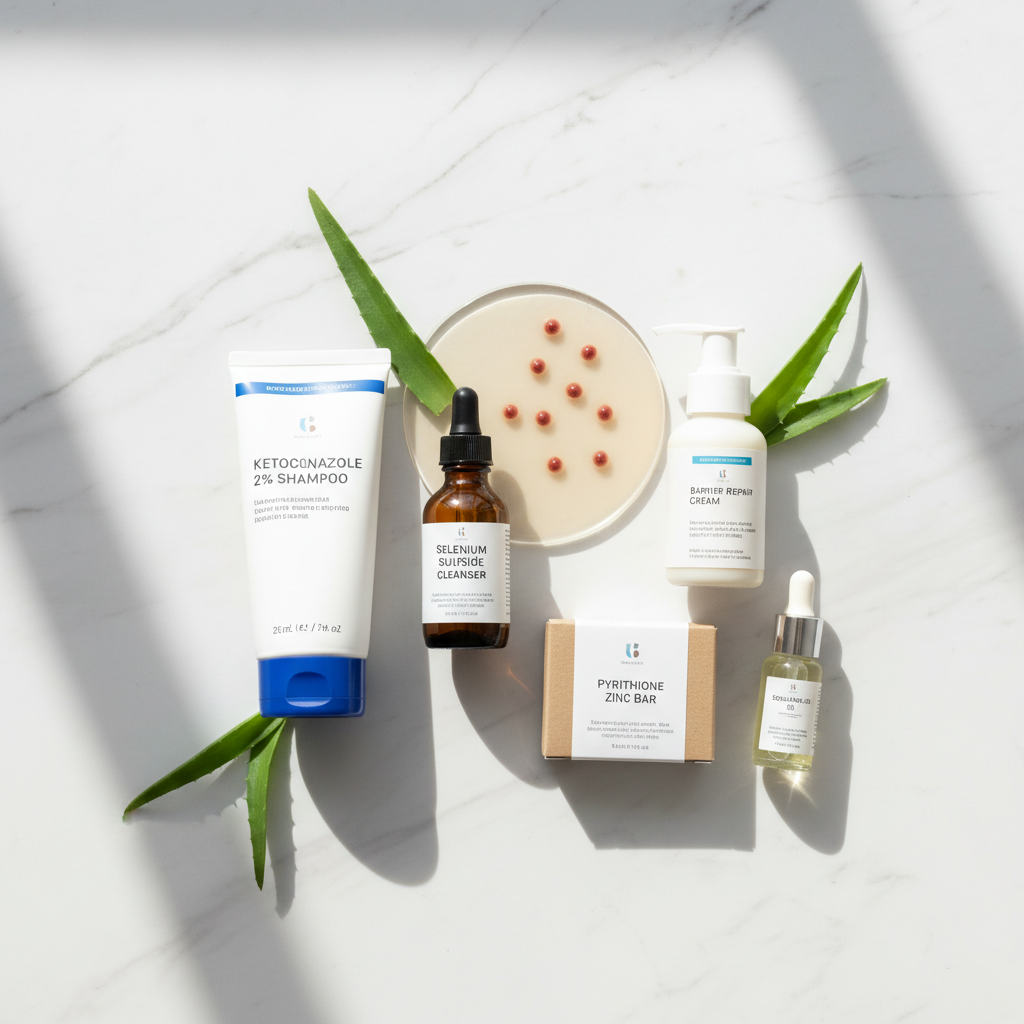
Fungal acne, or Malassezia folliculitis, requires a different approach than traditional acne, often responding best to topical antifungal ingredients like ketoconazole, selenium sulfide, or pyrithione zinc. Identifying these uniform, often itchy bumps and adjusting your routine to incorporate fungal-safe products and strengthen your skin barrier are key to clearing them effectively.
Introduction
Navigating the world of skincare can feel like a complex puzzle, especially when dealing with persistent breakouts that don’t respond to conventional acne treatments. If you’ve been battling small, uniform bumps that seem immune to salicylic acid or benzoyl peroxide, you might be dealing with fungal acne, a condition often mistaken for its bacterial counterpart.
What Exactly is Fungal Acne and How Does It Differ from Regular Acne?
Despite its misleading name, “fungal acne” isn’t true acne in the traditional sense; it’s a common skin condition officially known as Malassezia folliculitis (or sometimes Pityrosporum folliculitis). It occurs when there’s an overgrowth of a naturally